

M.Phil in Art and Design
M.Phil in Art and Design
M.Phil in Art and Design
See what this programme offers
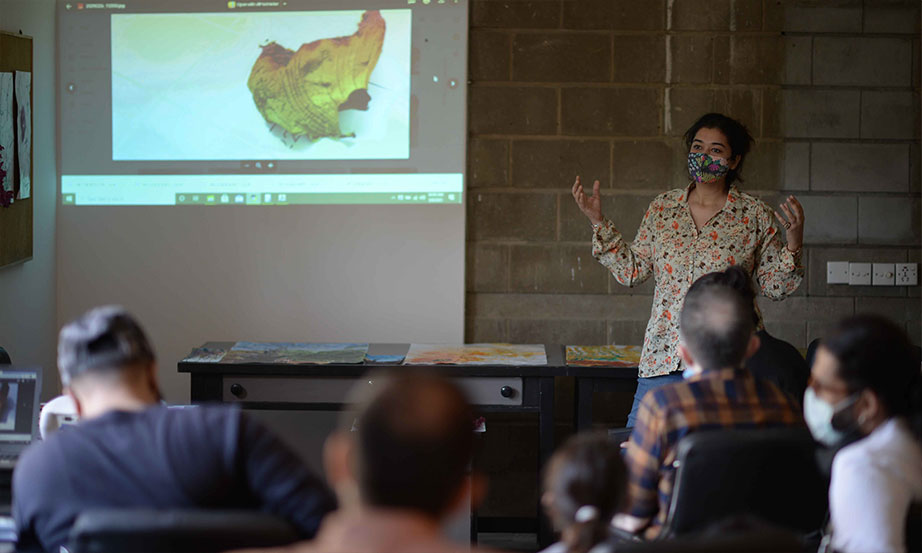
The Graduate Programme at IVS is grounded in the overall mission of the school, a belief that visual arts and culture play a foundational role in shaping society. It is the only graduate programme in the city that surpasses the disciplinary and hierarchical distinctions in the visual arts and fosters interdisciplinary research and practice. With an emphasis on integrating decolonial theoretical approaches with creative practice and research, the Graduate Programme creates a space for reflection and experimentation, enabling recent graduates and established practitioners to broaden the scope of their existing work and academic/research interests.
Engaging with a broad range of researchers and practitioners from Pakistan and abroad, the programme offers full time studies, with mostly evening and weekend classes, specifically to create opportunities for full time practitioners, teachers and educators to benefit from the programme.
The programme has been developed with the following objectives:
1. Interdisciplinary Study
To depart from the strict disciplinary boundaries offered in undergraduate programmes, and focus on Critical and Creative Practice through the integrated and interdisciplinary curriculum offered by the M.Phil. in Art and Design. The programme hopes to encourage students to think creatively, critically, and holistically to deepen their learning experiences while undertaking knowledge production in the arts. Both faculty and students come together from diverse creative and disciplinary backgrounds for an enriched pedagogical experience.
2. Research and Practice
Together with an interdisciplinary focus, to fosters a research-driven approach in teaching and learning that fosters innovative, inquisitive, and critical ways of thinking in the visual arts. Towards this, most courses in the graduate programme, specifically the studios, become a sanctuary for research and practice within an interdisciplinary academic setting. The programme acknowledges students’ diverse research and practice-based interests, facilitating them to work with their strengths and professional requirements.
3. Context
To be contextually rooted in ‘place’, taking into consideration its own position as situated in one of the largest metropolises of the Global South. The programme seeks to draw from the comparative understandings of the urban, social, economic, cultural, environmental and political knowledge and issues of the regional and post-colonial cities while anchoring knowledge production in Karachi as a key text and context. The resulting ontological and epistemological questions that arise from an engagement with the ‘place’ help to generate discussions and create knowledge in visual arts and its education. The program aims to aid students in developing a deeper understanding of these spheres of knowledge both as local and global citizens.
4. Education
To raise important questions about the larger (social, political, and regional) concerns of education and educational institutions, recognizing the wide-ranging perspectives on and challenges faced in present day education systems. The Graduate Programme aims to provides a space for cross fertilization of ideas and methods, as well as pedagogies that are critical, interactive, participatory, problem driven and enquiry-based. Students are encouraged to examine various philosophies of education, colonial and postcolonial systems of education and development of the art school in the region, and to interrogate the relationship between their creative and teaching practices in order to develop pedagogies that are relevant and suitable for their contexts.
5. Ethical and Social Responsibility
With place and city as a resource for knowledge production, students are encouraged to question, deliberate, and reflect on the role of art and design in the society, and realize ethical and social responsibility in creative work and/or enterprise. They are encouraged to be socially responsible, professionally diverse, and competent future educators, researchers, practitioners, and professionals.
Year 01 – Semester A
Fall
| Course | Credits | Description |
|---|---|---|
| Graduate Research Methods – I | 3 | A primary course within the programme. Introduces students to research methods. Research as practice, practice as research. |
| Decolonial Imaginaries | 3 | Using decolonial lenses to understand art/design history and contemporary creative practices. |
| Studio I | 3 | A studio course that takes into account different creative practices, and one that is thematically designed based on the instructor teaching the course. |
| Elective | 3 | |
| Workshop I | 1/3 | At the start of the semester. Workshop focused on making and reflective writing. |
| Total Credits | 12 |
Year 01 – Semester B
Spring
| Course | Credits | Description |
|---|---|---|
| Critical Pedagogies | 3 | The course helps students who are either educators or wish to teach, to situate their pedagogy as practice. |
| Graduate Research Methods II | 3 | As an extension to GRM I, the course builds on the first research methods module, and helps students prepare their research proposal to be presented at the end of the semester. |
| Studio II | 3 | A studio course that takes into account different creative practices, and one that is thematically designed based on the instructor teaching the course. |
| Elective | 3 | |
| Workshop II | 1/3 | Workshop focused on presentation, documentation and portfolio making. |
| Total Credits | 12 |
Year 02 – Semester A
Fall
| Course | Credits | Description |
|---|---|---|
| Independent Studio/Elective | 3 | Students have the option of either pursuing an elective or an independent studio. |
| Thesis I | 3 | Students begin to work on their thesis. Meet with their thesis committee throughout the course of the semester. |
| Workshop III | 1/3 | Workshop focused on grant-writing/professional practice. |
| Total Credits | 6 |
Year 02 – Semester B
Spring
| Course | Credits | Description |
|---|---|---|
| Thesis II
|
3
|
Students work towards the completion of their thesis. Meet with their thesis committee throughout the course of the semester. Students will submit and present their work in August (the same year). |
| HEC Required Course | 2 | |
| Total Credits | 5 | |
| Cummulative Credits | 36 |
Core Courses
Graduate Research Methods I: Practice and Research
The course reflects the broader philosophy of the graduate programme – integrating critical theory, creative practice, and research. Students are introduced to the existing methods of enquiry for academic papers and research methods practiced in creative fields, with the understanding that art/design practice as research is in its nascent stages of recognition, specifically within our educational contexts, and that the methods are continuously being studied and expanded. The course familiarises students with the research methods used in Social Sciences and Humanities, considering that visual arts and art education also draw from various traditions of existing research practices. Students learn the fundamentals of academic research; critical, creative and reflective tools and techniques used in creative practice research; and the ethics of research. Encouraged to reflect upon their existing work, it is expected that the students will actively participate in class discussions and create a critical and analytical framework for their written- and/or practice-based enquiry. The course is partly run as a colloquium and invites creative practitioners from diverse backgrounds to share their work at the intersection of theory, practice, and research.
Graduate Research Methods II: Thesis Seminar
Thesis seminar facilitates extensive exploration of students’ individual or collaborative research interests, and analyses by peers and faculty. It enables independent work in creative practice as students develop research questions, methods, materials, and artefacts, relevant to their study, and submit a cohesive and well-coordinated written and visual proposal for thesis. The thesis seminar stresses the importance of ethical research practices and ensures that students acknowledge those in their proposals. Successful completion and acceptance of the thesis proposal is mandatory for students to proceed to the thesis semester. Based on their proposals, students identify primary and secondary advisors and form a thesis committee to advise them with their developing projects.
Graduate Roundtable
A mandatory component of the Thesis Seminar, Graduate Roundtable is organized as a pro-seminar by final year students, at the end of third semester. Students present their ideas and proposals for thesis projects. The graduate advisory team approves the thesis proposal before students undertake their thesis projects.
Decolonial Imaginaries
Responding to the call for a radical decolonization of curricula, methodologies, practices and perspectives, this course begins with offering an introduction to concepts of the colonial, postcolonial and decolonial, from the development of postcolonial theory to its influence on contemporary theorisations of decoloniality, intersectionality, and critical race theory. While familiarizing students with key texts and contexts in post and decolonial studies, the course provides ways to identify ways in which theory, contemporary global events, and real/everyday life are related, providing students with the tools and historical knowledges to engage effectively in decolonizing their own perspectives and practices.
Colonialism plays a central role in how our political, economic, and social relations have been formed and organized. Examining some of the issues central to colonialism, post-colonialism and decolonization, we look at the intersecting colonial histories, the formation of colonial and neocolonial systems of governmentality, labour and food systems, economic and ecological debates and anti-colonial critique and resistance. In the latter weeks of the course, we think about how concepts such as community, love and care disrupt and even upend the destructive mechanism and cycles of colonial legacies today. Through this course, we will engage in deep and thoughtful analysis of how colonial relations of power, race, gender, class, and culture intersect.
Critical Pedagogies
Questions of education, education’s purpose and its institutionalization are central to this course. It anchors this study in response to the urgent need to re-examine our educational systems influenced by the demands of the broader social, cultural, political and economic structures, and spiritual relations. As a consequence, educational institutions also place demands on teachers, both in schools and higher education, affecting and shaping what happens in the classroom. Collectively the class investigates the notion of pedagogy as a critical and creative practice spanning: practice of freedom, intellectual emancipation and issues of race, class, gender and language. It examines what it means to teach in a highly digitalized and connected world, under the current global pandemic, and its lasting impact on an educator’s work. The emergence of educational institutions and art schools in the region, South Asia, and the associated issues inherent in the process are studied.
Questions of pedagogy as a creative process, and creative process as pedagogy are raised and discussed. The course relies on seminal philosophies, theories, and histories of education. Students are expected to draw references from their personal experiences as teachers and/or students – everyday educative practices inside and outside the classroom – to draw parallels to the philosophies in education. Jacque Ranciere, Paulo Freire, Sarah Ahmed, Bell Hooks and others guide us through the process, as students reflectively and deeply examine their practices and develop pedagogies that are meaningful, unique and effective in their work.
Elective Courses
Critical Urban Theory
Neoliberalism and Cities as Sites of Contested Spatialities: The Case of Global South
In this course, we will reflect on neoliberalism as a political project and an economic assault, tracing its origin, evolution, globalization, and influence on socio-economic and environmental fabrics of cities (urban spatialities) from perspectives of critical urban theory. The focus, however, will be on the exploding cities of the Global South in which the process of neoliberalization has become a major driving force behind increasing socio-economic inequalities and worsening environmental conditions since the turn of the 21st century. This course is hence structured around six underlying thematics, beginning with discussions on critical urban theory as a critique of ideology and power in pursuit of spatial justice and the right to the city, before shifting focus onto neoliberalism as an ideology and expression of power that quietly surfaced in the 1980s and has ruled the world since, albeit namelessly. It then enters the sphere of cities in which the symbiotic relationship between the neoliberal project and the urban condition is deconstructed and reconstructed. It then locates the arrival of neoliberal policies in the Global South, uncovering its impacts on the major cities of the region, comprehending them as venues of contested spatialities or spatial conditions defined by the formal and the informal, the pedagogical and the performative, the imagined and the actual. Here, we will take a look at cities like Sao Paolo in South America; Mexico City in Central America; Douala in Central Africa; Cairo between North Africa and The Middle East; Manila in Southeast Asia; and finally Mumbai, Karachi and Dhaka in South Asia. The course will then conclude with discussions on the need for urban movements and urban reforms at which juncture we will gaze on the city of Medellin in pursuit of lessons and inspirations.
Curatorial Studies
Curating Unruly Knowledges
This course locates curating as an urgent political practice. It does not limit curating to the logistical display and consumption of art and culture, but rather as a critical creative practice that produces new and ever-changing constellations of knowledges. This is a practice-based course where students will be pushed to practice curating as a way of thinking in terms of interconnections, linking objects, images, processes, people, locations, histories and discourses, to produce generative tensions and entanglements that respond to devastating events and urgencies of the present moment.
The course will address the aesthetic, social, political and philosophical questions regarding curating, paying special attention to the the political, and to our relationship as cultural workers to an increasingly marketized and militarized public sphere. We will explore the the histories and presents of colonialism, nationalism and globalization to investigate the ways in which military and global capital are impacting cultural production in South Asia and the Global South at large. Against our highly surveiled and militarized public sphere, students will understand curating as political action: the making of constellations and connections that strive to unsettle normative ways of being and thinking and push new ideas that challenge state-sponsored dictates.
Given our new present of the Covid-19 pandemic, students will be encouraged to think reflexively about the past, present and potential futures of exhibition-making and curatorial practice. The course will give students the opportunity to respond to the new limitations imposed by the outbreak of the Covid-19 pandemic, and learn to use the virtual realm in creative and experiential ways for the production, circulation and dissemination of knowledges.
Arts and Cultural Management
Over the last few decades the introduction of art management university courses has been read as an attempt to codify how arts organizations should be run into models that can be replicated across geographies to create a global arena of business for the arts. This course takes stock of these motivations but discerns between leveraging structures and systems for profit versus using them with concerted deliberation for sharing widely the benefits of the arts. While demonstrating the challenges a capitalist orientation to the arts can pose to equality, inclusion and intra-generational equity, it examines alternate approaches to arts enterprise that draw on the methodology of effective business to make more meaningful contributions to the sector and its audiences.
The course is divided into four thematic sections. The first considers the effectiveness of an arts organization in relation to its mission, program and dissemination strategy. The second builds on these values to seek a critical understanding of the heritage sector, issues of representation and identity as well as the risks of instrumentalizing heritage. The third examines the potential of democratizing the arts, prying them away from the realm of commodity creation for the elite to a space of expression and collaboration for all. The last section considers the state’s role in supporting arts initiatives and the extent to which political will and policy levers can enable the arts for particular purpose.
Wherever possible class materials draw on local examples or from resonant contexts, particularly those that have had a formative cultural impact on Pakistan (the US and the UK) or that are currently the negotiating cultural space in Pakistan (e.g. China and Turkey).
Spatial Design and Enquiry
The Inner Garden, The Outer Garden
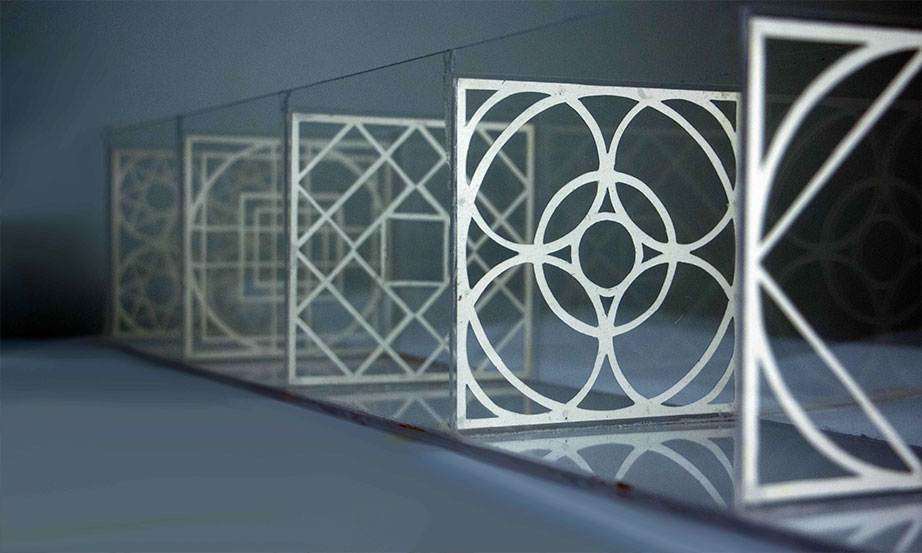
The course examines the Garden as described in the Quran and the mystical writings of poets and saints. It explores the Garden as a spatial archetype for union with the Divine and attempts to study this archetype from the lens of aesthetics, phenomenology and ethics.
In the context of our increasingly interconnected world, we will closely study and explore the Garden as a metaphor and space for pluralistic thinking and community well-being. The course will also examine the garden as the “grounds” for the reconciliation of beauty and ethics in the built environment. As ecologies around us continue to degrade, the course draws particular attention to the role of the garden as a way of restoring balance and harmony with the natural world.
Spatial matters of light, water, scale and thresholds are explored as a way of studying and creating moments and spaces that allow us to deepen our understanding of the earthly garden as a reflection of the “Hereafter”. In the end, this course may lead us to consider and expand our understanding of the world, as we participate and make it everyday – as a garden.
General Electives I & II
The graduate programme offers electives from a wide range of courses offered by the Liberal Arts programme as a way to cater for the diverse academic interests of the graduate students. Students should notify in advance if they are interested in Liberal Art electives or courses. The general elective courses change every semester.
Studio/Reading Elective
This elective course provides an opportunity to students to explore and pursue specific interests in studio practice or theoretical study of art and design, working with a faculty member at IVS. Students write a short proposal outlining their study, after approval they may contact the relevant faculty member. The course will be offered based on the availability of the faculty member and acceptance of the student’s proposal.
Studio Courses
Students work with a predetermined studio thematic in the first two semesters of their graduate study, analysing a subject from multiple viewpoints, diverse academic and professional backgrounds, and working together to develop interdisciplinary thinking and insights. Studio provides a space for students to examine their existing practices and position them in the context of the thematic framework. It is conducted through a series of seminars, design exercises, discussions, case studies, critiques, and guest lectures. Important works, that are crucial to a student’s own practice, are read and critically analysed, as a way for the development of strongly rooted research-based practices.
Studio: Pedagogies of Place | Design for Harmony
Karachi offers a myriad of visual material that has the potential to inform the creation of moments of profound peace and silence. This palette of material, both natural and man-made, calls for deep attention and affection. It is only by looking closely and with affection, we are able to design for a city that calls for harmony and stability. This studio is an invitation for all practitioners to closely observe, interpret and create for a specific condition in our city. This condition may either be real or imagined.
As individuals with an ongoing creative practice, this course is formatted to provide students with the opportunity for reflection and thoughtful design. It is a deliberate call to return to the very essence of the natural in the city as a way of creating peace and calm in our environment. In a time of environmental crisis, this course will encourage a focus on the rhythms and intricacies of the natural world as an essential way of restoring balance and coexistence. In our bustling city of twenty million people, the studio’s ultimate aim is to enable and instill in us an acute ability to observe and understand the beauty and goodness present in that which is of this place, as a way of bringing that deep sense of presence into our practices and the city.
The studio is divided into three segments – all of them being interconnected. We will journey from a place of deep observation of a condition, to creating a seat for oneself amidst that condition, and ultimately move to including others as a way of sharing that space.
Fundamental to the programme and the studio is the possibility for conversation between architects, artists, graphic designers, textile designers, etc. We see this as a unique opportunity for the sharing of techniques and ideas. The studio will encourage peer reviews and group discussions as a way of developing an understanding of one’s own creative thinking and practice.
Studio: Pedagogies of Place – Digital Technologies | Vampires v/s the Commons
What is the future of “the commons” in the face of Capitalism’s extractive networks? What happens to art when the category “human” becomes redundant? Why must we keep the commons alive; and is it hopeless to try? The damage done to people and environments by global economies of extraction, beg for local resistance movements to also expand regionally (even globally) if they are to remain in existence. Without larger networks of solidarity resisting such incursions; intersections of corporate and state interest (i.e. “public-private partnerships”) can blitz through cities of South Asia, consuming indigenous cultures, knowledge, and relations to the commons in the exhaustive quest for resources. Like strip mining, when the land dries up, the vampire leaves to find another body in a ritual of serial extraction and disposal. This course locates itself in a time of environmental and ethical crises, global pandemics and militarized governments. A time of buying property on the moon. A time of exponential high-tech resource extraction across the planet; a network of veins, pulled blue by vampire cities, states, and corporations. The definition of the commons that will be most used in this course will be as that of a shared space that no one can claim ownership over. A resource like sunlight or the sea’s breeze, which seems to have become finite under various regimes of control. Immune to the defenses of city, state or nation. Ours is a time of global corporate assemblages, tentacular markets and special economic zones, which can bypass the protections of regional, national or public interest. A time of post-human economies, scarcity of unmeasured quantities, automation and self-sustaining logistics that no longer frame humans in the center of their maps. How, in such a climate of competitive hunger games are we to imagine places of coexistence, wonder, or friendships? This interdisciplinary studio in digital technologies, surveys the commons in physical and “cyber” space; investigating the economic pressures on its survival; and turning to alternative models of art making as potentials for survival and world making. Drawing its methodology from the interdisciplinarity of cultural studies, we will rely on vibrant class discussion to study a variety of media sources as a class. Our sources will include: academic and popular texts, vernacular culture; art; film; social media; video platforms and regional protest movements that rely on the commons for expression.
Independent Studio
The Independent Studio is dedicated to working with a mentor from the field and a faculty member from the programme, to develop an independent project. The studio provides a space for the students to experiment, play, investigate an idea, explore mediums or materials, to develop a body of work that can be a stand-alone project or lead to the thesis. The mentor could be a faculty member from IVS or other educational institutions, from the art and design industry, media and cultural institutions, or art organizations.
Structure
Students register for the Independent Studio after successfully completing Studio I & II. They develop a proposal for the Independent Studio study and work with a primary advisor/mentor selected from a pool of advisors offered by the programme and a secondary advisor from the graduate programme. The secondary advisor monitors students monthly progress and meets with the student as required.
Those students who intend to register for the Independent Studio, submit a proposal before the beginning of the semester and share with the graduate programme faculty for approval. Based on the proposal a mentor will be recommended, alternately students can also recommend an advisor (subject to approval). After necessary approvals, students meet with their mentors at the beginning of the semester to discuss their projects. The student is responsible for developing a timeline/plan and deliverables for the semester and sharing it with the graduate programme faculty as well as the mentor. Once finalised, the student shall start the process and meet with the advisor 8-10 times in a semester (could be more as and when a need arises). The graduate programme faculty will meet with the student once a month to evaluate progress and project development.
Proposal
Students are required to write a 500-1000 word proposal for the Independent Studio. It should include three important components:
- Introduction/description of the proposed study.
- Context – literature/reading list, art and design practices, relevant to a student’s project.
- Methodology – what are the methods and practices that will be employed to undertake the project.
- Timelines and deliverables for the course – a weekly plan and expected outcome of the project.
- Students may want to add other details that they deem necessary for their proposed study.
Thesis
During the semester prior to the thesis semester, students develop an extensive thesis proposal. Based on their proposal and in consultation with the DGS, graduate students are required to choose a thesis advisor, from across disciplines at IVS and form a thesis committee (based on the students’ project requirements, thesis advisor could be from outside the IVS, subject to approval). The thesis committee comprises of a primary thesis advisor and two other faculty members. During the final semester, the students work independently and meet with the advisor at least once a week. The primary advisor plays the main role in guiding the student on a regular basis and is also responsible for administrative matters, such as calling for meetings or arranging reviews, informing the DGS of committee formation, establishing deadlines, etc. The two other committee members are involved in periodic reviews of the thesis work and progress. Students are required to present their thesis to the entire committee, including the DGS (if not part of the committee) and an external juror.
Thesis is an integrated research project with a written and visual/design component, considered collectively as a thesis, and can be undertaken as:
- A comprehensive visual art or design project with a written thesis of 8,000 – 10,000 words.
- A substantial visual art or design project with a written thesis of 10,000 – 14000 words.
- A written thesis of 14,000 – 18,000 words with a visual project.
At the end of year 1, and in consultation with their advisor/s of Graduate Research Methods II, students determine the route they will take to complete their thesis projects. The final ratio will be agreed upon in consultation with the thesis advisor.
Workshops
All graduate students are required to attend three workshops, in writing and professional practice, offered by the programme. These workshops are offered during the orientation week and serve as a warm up to the semester. The workshops collectively comprise of one credit.
Lecture Series
Graduate Programme regularly invites speakers to present their work, ongoing research projects or present a lecture on a topic of relevance. All students are expected to attend these lectures.
People
- Full-time Faculty
- Visiting Faculty
- Staff
- Students
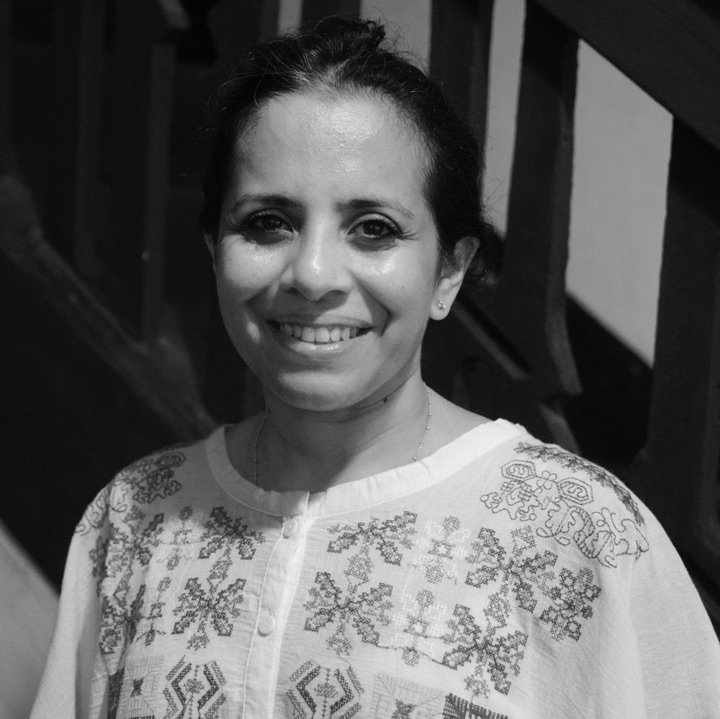
Mariah Lookman
Director Graduate Studies
- D.Phil., Ruskin School of Art, University of Oxford.
- M.A., (Fine Art Media, History and Theory of Art). Slade School of Fine Art, University College London.
- B.F.A., (Painting major, Photography minor). National College of Arts, Lahore.
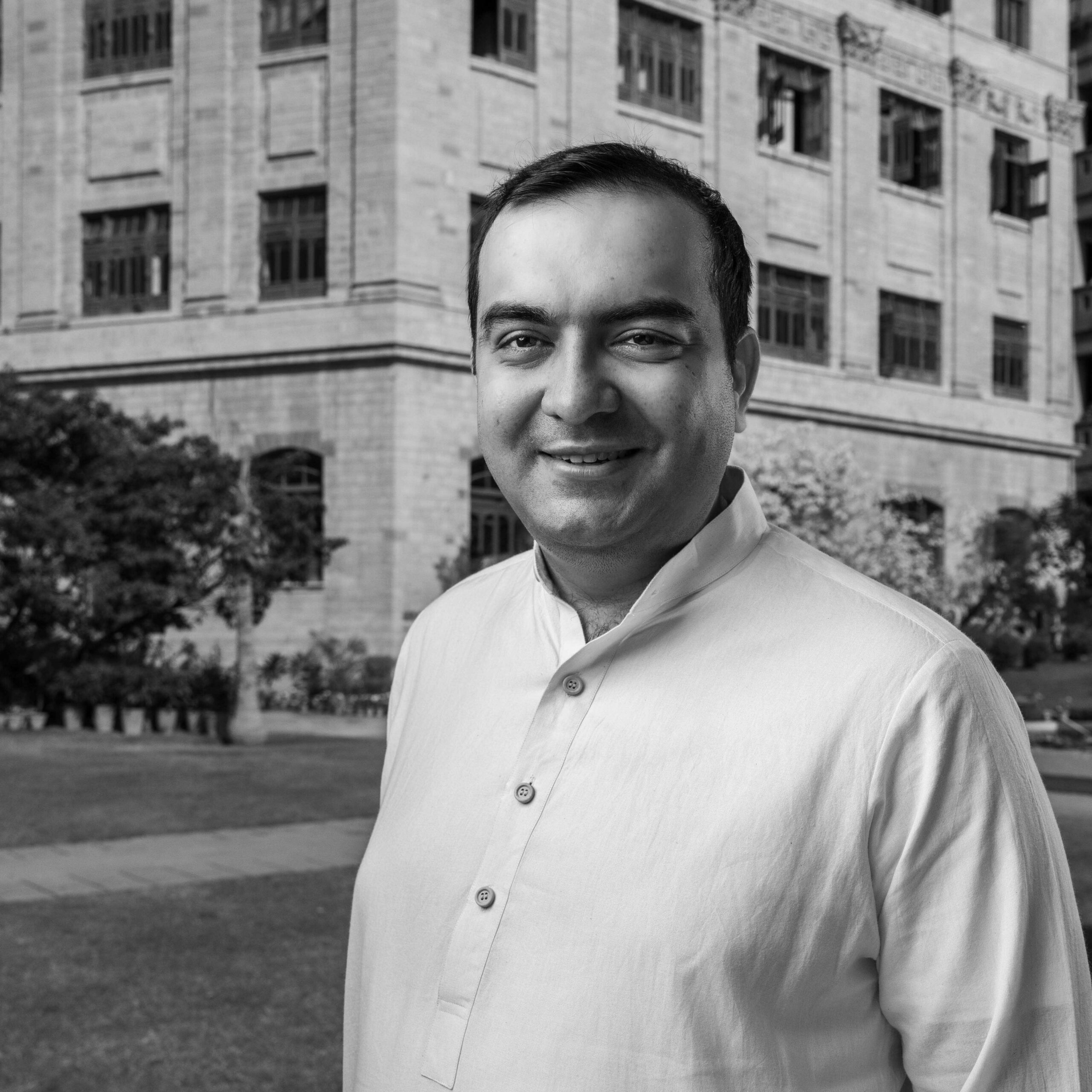
Currim Tufail Suteria
Assistant Professor
- M.Arch, University of Waterloo, Cambridge, Canada
- B.Sc. (Architecture), McGill University, Canada
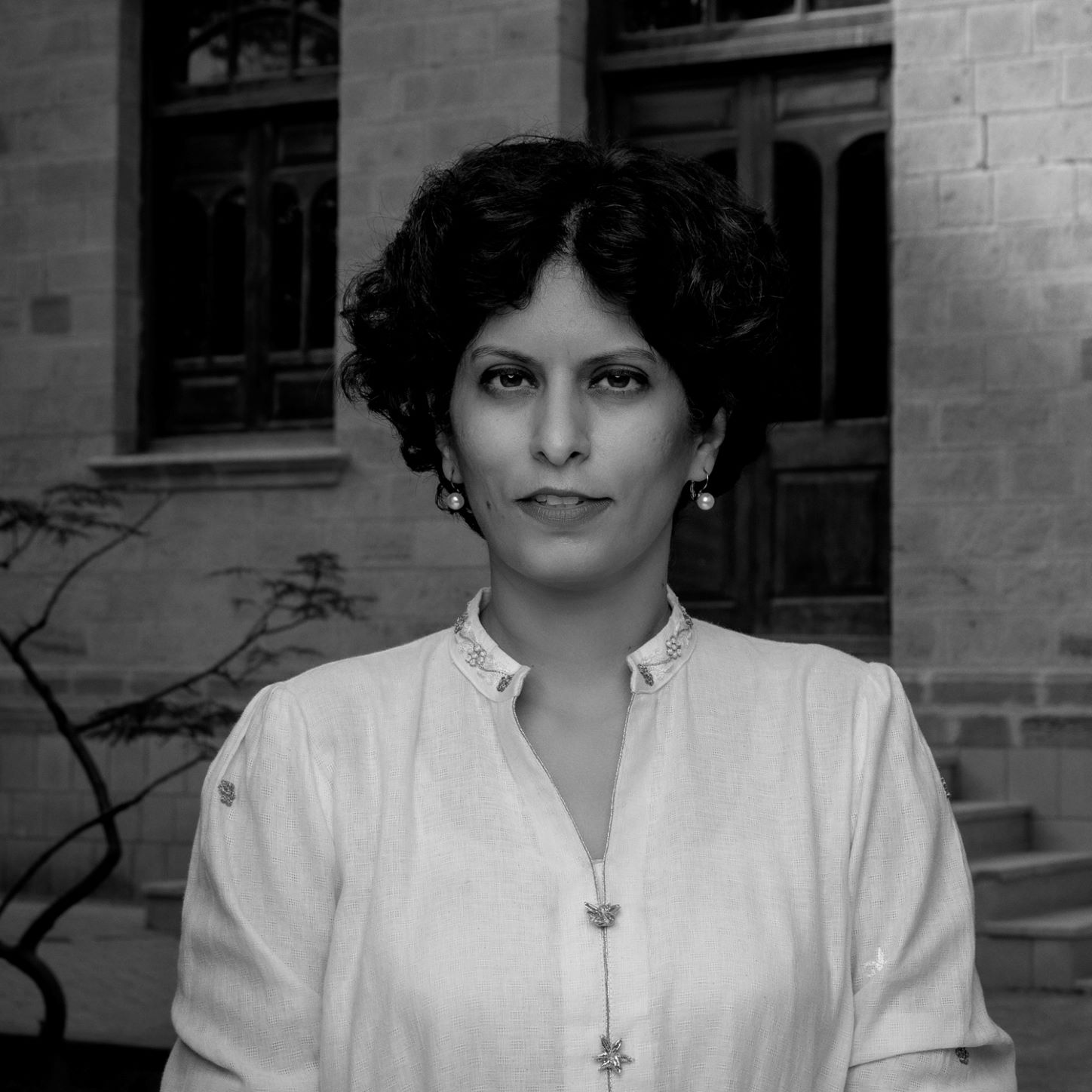
Dr. Faiza Mushtaq
Associate Professor
- PhD. Sociology, Northwestern University, USA
- M.A. Sociology, Northwestern University, USA
- B.A. Sociology, McGill University, Canada
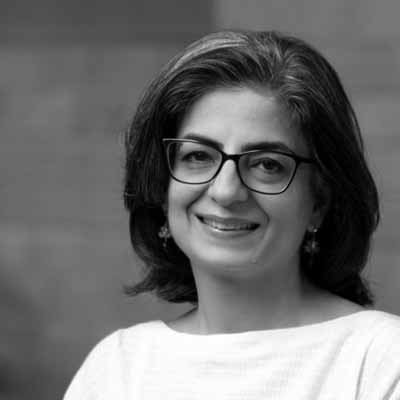
Sadia Salim
Professor
- EdM, Art and Art Education, Columbia University, New York, USA
- B. Des, Indus Valley School of Art and Architecture, Karachi, Pakistan
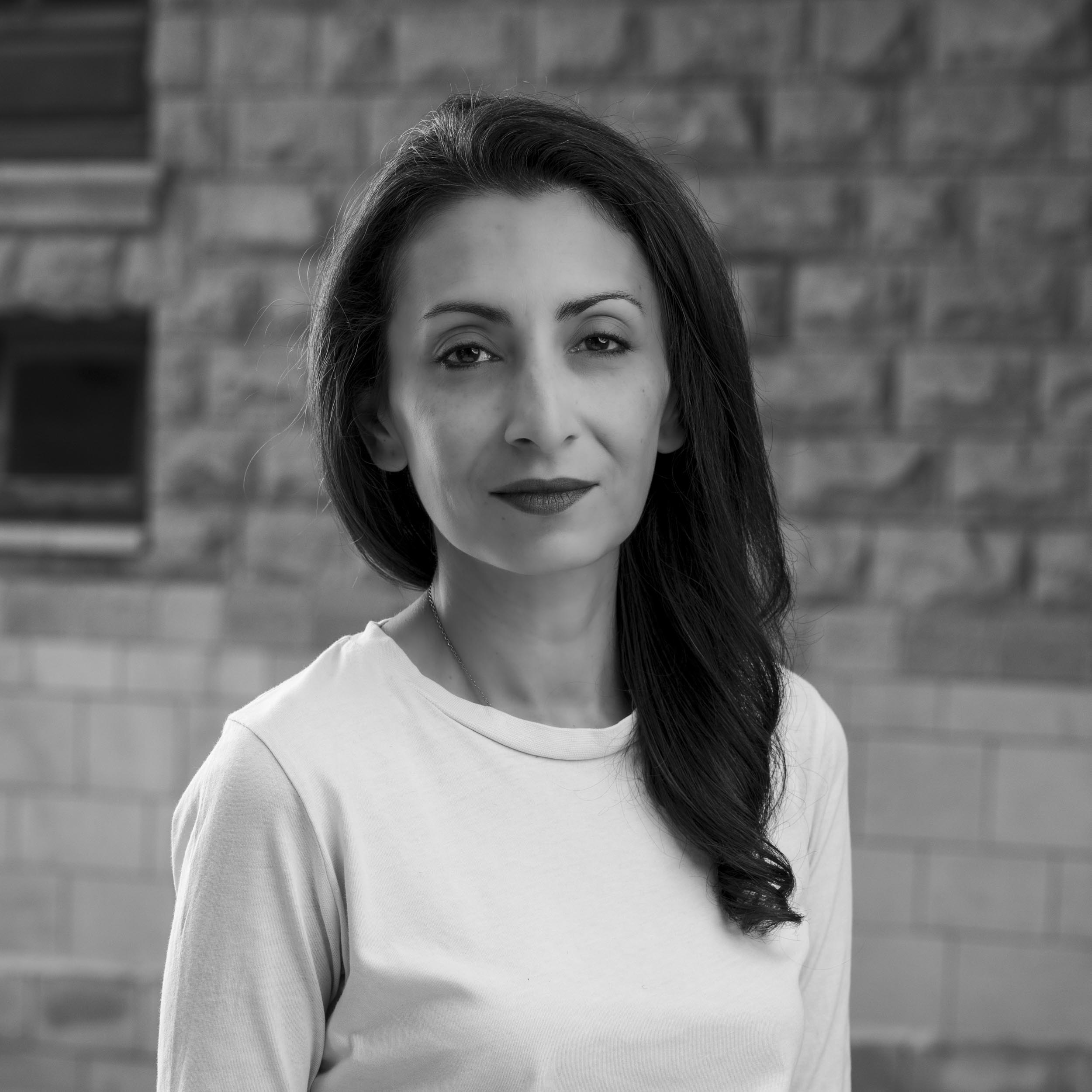
Zarmeene Shah
- MA, Critical and Curatorial Studies: Modern Art, Columbia University, New York, USA
- BFA, Indus Valley School of Art and Architecture, Karachi, Pakistan
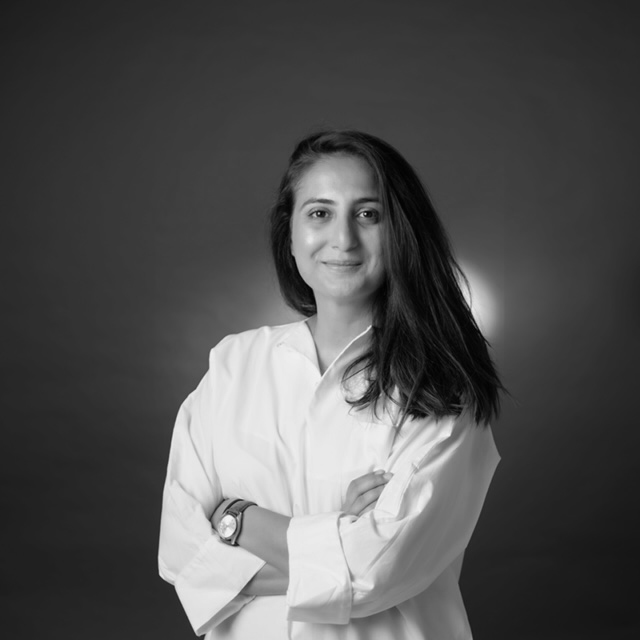
Marvi Mazhar
- Masters from Goldsmiths, University of London in Research Architecture, London, UK.
- Masters in World Heritage and Cultural Management, University Di Torino, Italy
- B. Arch Indus Valley School of Art & Architecture, Karachi, Pakistan